
AMAZON LISTING GUIDE • 2026
Listing
Optimization in 2026:
10 Ways to Improve Rankings and Sales
A practical guide to improving Amazon titles, bullet points, keywords, images, A+ Content, offers and advertising performance.
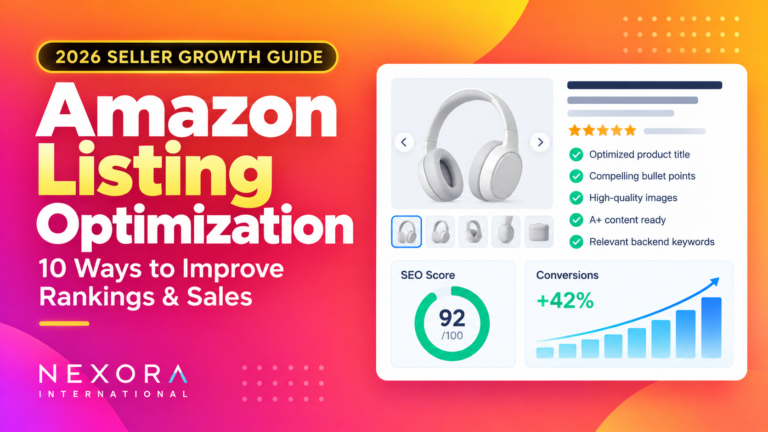
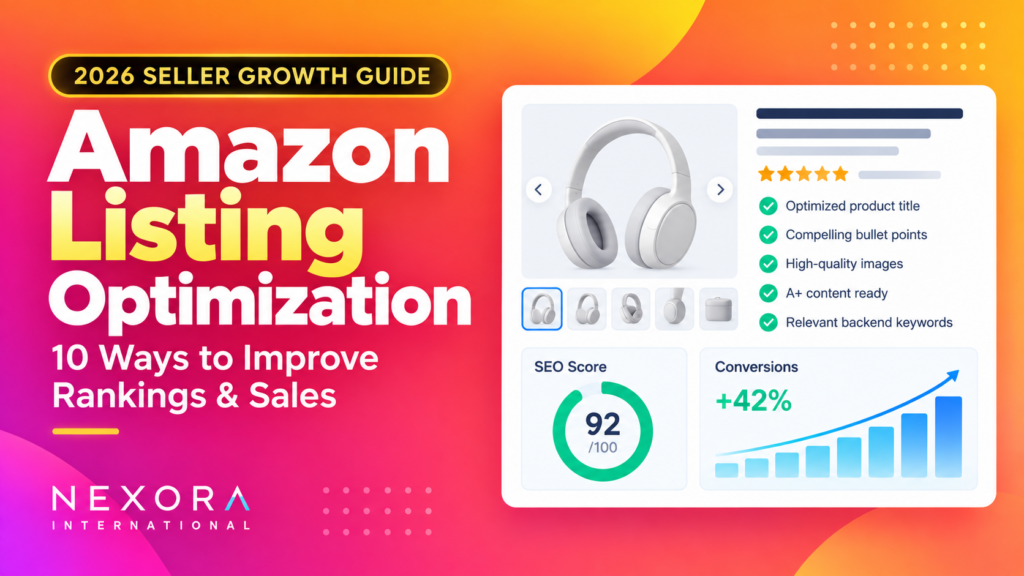
Amazon listing optimization improves titles, bullets, descriptions, keywords, images, attributes and offers to increase relevant visibility and conversion potential.
Connect products with relevant searches.
Answer questions and build buyer confidence.
Improve listings using real data.
Amazon listing optimization is the process of improving every customer-facing and behind-the-scenes element of a product listing.
An effective listing explains what the product is, who it is for, what problem it solves and why a customer should choose it.
Identify the product clearly.
Explain features and benefits.
Show important details.
Create a richer experience.
Search visibility alone is not enough. A listing must communicate value, reduce uncertainty and help customers make an informed decision.
- Appear for relevant searches
- Improve click-through potential
- Increase conversion potential
- Strengthen PPC performance
- Reduce customer confusion
- Support organic growth
Understand how customers describe the product and what they expect before writing listing content.
Type, material, size and compatibility.
Problems, outcomes and objections.
Primary and long-tail phrases.
Use Amazon suggestions, Product Opportunity Explorer, available Brand Analytics data, PPC reports, competing listings and reviews.
The title should identify the product accurately while remaining easy to scan.
Example: NorthPeak Insulated Water Bottle, 32 oz Stainless Steel, Leakproof Lid for Hiking, Gym and Travel
- Place the main product phrase naturally near the beginning.
- Include useful decision-making details.
- Keep the title readable on mobile.
- Follow current category requirements.
- Avoid repetition and unsupported claims.
Connect product features with practical customer benefits.
Double-wall stainless steel construction.
Double-wall insulation helps drinks maintain temperature during work, travel and outdoor use.
Treat the description as a concise buying guide.
- Who the product is for
- How it should be used
- Important benefits
- Materials and construction
- Size and compatibility
- Included components
- Care instructions and limitations
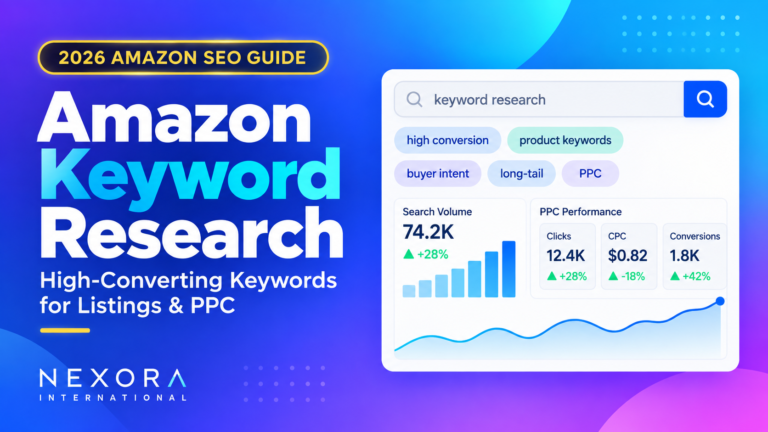
Keywords should provide useful context without damaging readability.
| Listing Area | Keyword Purpose |
|---|---|
| Product title | Primary product phrase |
| Bullet points | Features, benefits and use cases |
| Description | Supporting long-tail phrases |
| Backend terms | Additional relevant terminology |
| PPC campaigns | Tested keyword and product targets |
Use backend fields for relevant terms that are difficult to include naturally in visible content.
- Relevant synonyms
- Common abbreviations
- Alternative names
- Secondary use cases
- Unrelated keywords
- Misleading claims
- Competitor trademarks
- Unnecessary repetition
Images communicate product information quickly and help customers understand details that are difficult to explain with text.
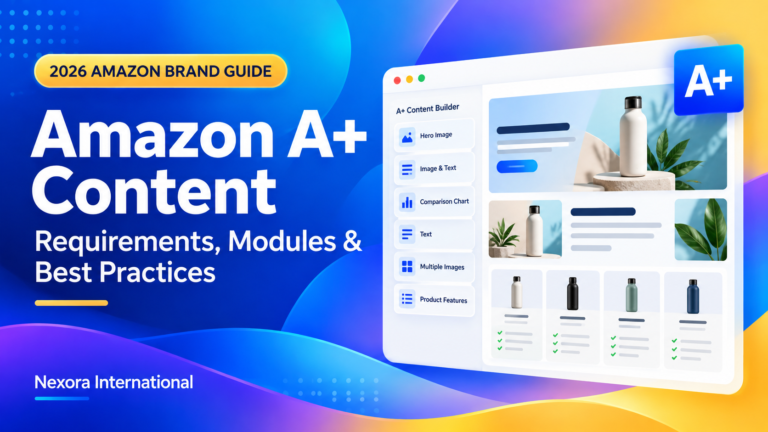
A+ Content can create a richer product presentation using enhanced images, text and comparison modules.
- Explain important benefits
- Show realistic use cases
- Clarify materials
- Answer common questions
- Compare related products
- Communicate the brand story
Customers also evaluate price, delivery time, availability and overall offer quality.
Reviews reveal how products perform and where listing information may be unclear.
- Deliver an accurate product
- Set realistic expectations
- Use compliant review-request tools
- Improve packaging and instructions
- Address recurring problems
- Update content when reviews reveal confusion
Sponsored Products can increase visibility, but advertising cannot permanently solve a weak listing.
Before increasing PPC spend, review the main image, title, price, reviews, inventory, bullets and offer competitiveness.
| Performance Pattern | Possible Issue |
|---|---|
| Low impressions | Weak relevance, indexing or demand |
| High impressions, few clicks | Image, title, price or reviews |
| Strong clicks, weak sales | Content, offer or product-market fit |
| Strong PPC, weak organic sales | Ranking or keyword coverage |
| High sales, high returns | Expectations may not match the product |
Avoid changing every element simultaneously. Make controlled updates and collect enough data.
Unnatural repetition
Benefits are missing
Quality and legal risks
Crowded graphics
Unverified promises
Incomplete information
Nexora coordinates research, content, design, advertising and account management.
| Service | Purpose |
|---|---|
| Keyword Research | Identify relevant customer searches |
| Listing Optimization | Create conversion-focused content |
| Product Images | Communicate features visually |
| A+ Content | Improve education and branding |
| PPC Management | Control targeting and efficiency |
| Account Management | Coordinate operations and growth |
What is Amazon listing optimization?
It is the process of improving titles, bullets, descriptions, keywords, images, attributes and offers.
How long should an Amazon title be?
Requirements vary by category. Keep it clear, readable and compliant with current Seller Central guidance.
How many keywords should I use?
Prioritize relevance and intent instead of targeting a fixed number.
Do backend keywords improve visibility?
They can provide additional relevant search context when used accurately.
Does A+ Content improve rankings?
It primarily improves communication and customer experience. Rankings depend on several additional factors.
How often should listings be optimized?
Review them when performance, customer questions, competition or Amazon requirements change.
Nexora International can improve your Amazon content, images, A+ Content, SEO and advertising strategy.