

💡 Quick Answer
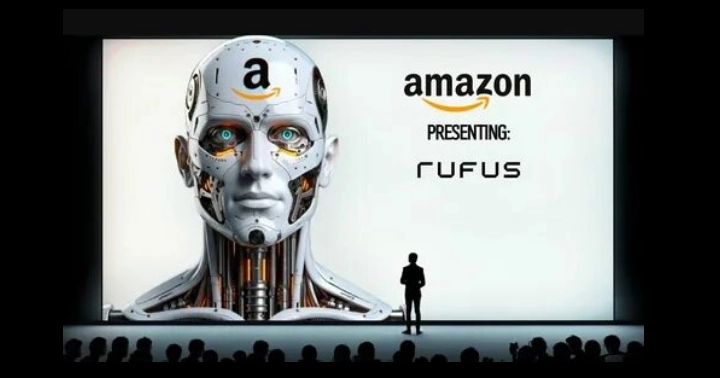
Rufus is Amazon’s AI shopping assistant, rebranded as Alexa for Shopping in May 2026. Instead of relying on keywords, it understands natural-language questions by analyzing product titles, bullet points, descriptions, A+ Content, Q&A, backend attributes, and customer reviews. To rank well, sellers should create clear, detailed listings that answer shoppers’ questions naturally.
What Is Rufus?
Rufus is Amazon’s generative AI shopping assistant, launched in February 2024. It reached over 300 million active customers by late 2025, with usage up 115% year-over-year and engagement up nearly 400%. Shoppers who use Rufus during a session are 60% more likely to complete a purchase than those who don’t – a gap large enough that “wait and see” stopped being a reasonable strategy for most sellers sometime last year.
On May 13, 2026, Amazon retired the standalone Rufus chatbot and merged it into a new assistant called Alexa for Shopping. The name changed; the underlying AI, the listing signals it reads, and the optimization approach carried over directly. Alexa for Shopping now sits inside Amazon’s main search bar by default for every signed-in US shopper — not tucked away in a separate chat window most people never bothered to open.
What this means for sellers: if you already optimized for Rufus, that work still applies. If you haven’t started, the surface area for AI-mediated discovery just got significantly bigger, and it’s no longer opt-in.
How Rufus Reads a Listing
Rufus doesn’t match keywords. It reads your full detail page as connected data and matches it to shopper intent.
| Listing Element | What Rufus Extracts |
| Title | Use case + buyer context |
| Bullet Points | Features linked to outcomes |
| A+ Content | Structured facts (primary data source, not decoration) |
| Backend Attributes | Direct technical answers (material, size, compatibility) |
| Q&A | Real answers to real buyer questions |
| Reviews | Verification that listing claims are true |
An empty attribute field isn’t a minor gap — it’s a question Rufus can’t answer, so it recommends a competitor instead.
3 Mistakes That Kill Rufus Visibility
1. Keyword stuffing.
“Yoga mat non-slip yoga mat thick yoga mat” is meaningless to a language model. Rufus scores coherence, not term frequency, so stacked keywords actively work against you now instead of helping.
2. Vague claims.
“Maximum comfort” gives Rufus nothing concrete to compare against a competitor. “Reduces impact by 40%” gives it a checkable fact it can cite with confidence.
3. Thin A+ Content.
Visually polished but text-light A+ modules are nearly invisible to Rufus, even though they look complete to a human scrolling past them on a phone screen.
How to Optimize for Rufus: 6 Steps
1. Rewrite titles around use cases.
“Insulated Water Bottle Stainless Steel 32oz” → “Insulated Water Bottle Keeps Drinks Cold 24 Hours – Leakproof for Hiking & Travel, 32oz.” The second version pre-answers the question a shopper would ask Rufus.
2. Turn bullets into answers.
“Double-wall vacuum insulation” → “Double-wall vacuum insulation keeps ice frozen through a full 8-hour workday.” Feature + outcome, every time.
3. Make A+ Content an information source.
Use question-style headers (“Is it suitable for beginners?”), comparison tables, and specific numbers. Amazon reports optimized A+ Content can lift sales up to 20%.
4. Fill every backend attribute.
Material, dimensions, compatibility, certifications — each blank field is a lost answer slot.
5. Seed your Q&A.
Don’t wait for organic questions. Add the 5–6 questions buyers actually ask before purchasing.
6. Strengthen reviews around real use cases.
Rufus cross-checks listing claims against review content. “Great for travel” backed by reviews mentioning airports and commutes is a stronger signal than generic five-star reviews.
Rufus vs Traditional Amazon SEO
| Traditional SEO (A9/A10) | Rufus / Alexa for Shopping | |
| Logic | Keyword matching + sales velocity | Semantic understanding of intent |
| Title | Front-loaded keywords | Keywords + use-case context |
| A+ Content | Visual/branding | Primary AI data source |
| Reviews | Trust signal | Claim verification layer |
Both systems run on the same listing at the same time — you’re not choosing between them, you’re building one listing that satisfies both.
Quick Checklist
- Title includes use-case context, not just specs
- Every bullet connects a feature to an outcome
- A+ Content has real text, not just images
- All backend attributes are complete
- Q&A has 5+ seeded, realistic questions
- Reviews are encouraged to mention specific use cases
Final Thoughts
Alexa for Shopping is now the default AI layer for every signed-in US shopper — this isn’t a future trend to prepare for, it’s already live and already influencing which products get recommended. The listings that win are complete, specific, and built to answer real questions, not stuffed with keywords for an algorithm that no longer works alone.
Managing this consistently across a full catalog — titles, A+ Content, backend attributes, and Q&A — is exactly the kind of ongoing work that’s hard to keep up with alongside PPC, inventory, and everything else running an Amazon account involves. Nexora International’s Amazon account management services include listing optimization built for exactly this: structured for how AI now reads and recommends your products.
FAQs
Is Rufus still called Rufus?
No. As of May 13, 2026, Amazon renamed it Alexa for Shopping. The optimization approach is unchanged.
Does Rufus replace Amazon’s regular search?
No. Traditional keyword search still runs alongside it. The same listing feeds both.
Does keyword stuffing hurt Rufus visibility?
Yes. Rufus evaluates coherence, not keyword frequency.
How long until I see results from optimization?
Test one ASIN for 30–60 days against an unchanged comparison ASIN and compare conversion.
Is A+ Content actually read by Rufus, or just decorative?
It’s a primary data source. Text-light modules are largely invisible to it.
Can small sellers compete under Rufus optimization?
Yes – complete, specific listings often outperform generic content from larger competitors.